There is fluid in the outer coax tubing.
In a typical Unist spray system with coax tubing, the fluid and atomizing air travel separately from the pump to the nozzle, where they are mixed just before or at the nozzle tip. There should not be any fluid present in the outer hose carrying the atomizing air.
When fluid accumulates in the outer air hose, it can result in large bursts of fluid from the nozzle, inconsistent lubricant delivery, and poor spray performance.
The most common causes of fluid in the outer air hose are insufficient atomizing air flow and improper nozzle orientation.
Atomizing air provides the energy needed to carry the fluid from the nozzle to the cutting tool. If the air flow is too low, fluid can collect within the nozzle assembly and drain back into the outer air hose. The optimum air setting varies depending on several factors, including tubing length, fluid viscosity, nozzle placement, and the machining operation being performed. On systems that use a metering screw to control atomizing air, a good starting point is approximately 1/2 to 3/4 turn open from fully closed. Systems equipped with regulators or proportional valves should be adjusted based on the application requirements.
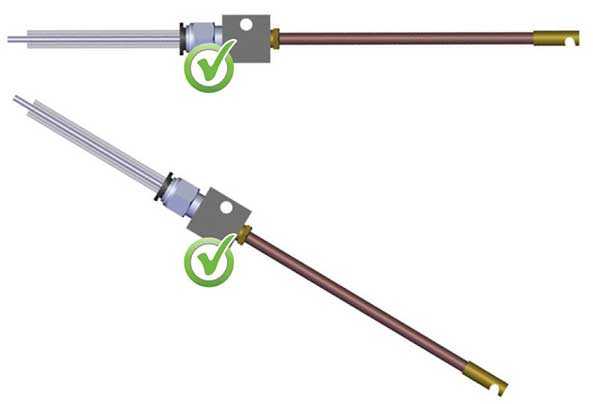
Nozzle orientation is also critical. Nozzles should be mounted horizontally or pointing downward whenever possible. If the nozzle or nozzle coupler block is oriented upward, fluid can drain back through the nozzle assembly and collect in low points of the outer air hose.

It is generally best to orient the nozzle and nozzle coupler block horizontally or pointing down so fluid can flow down and eventually out of the nozzle.
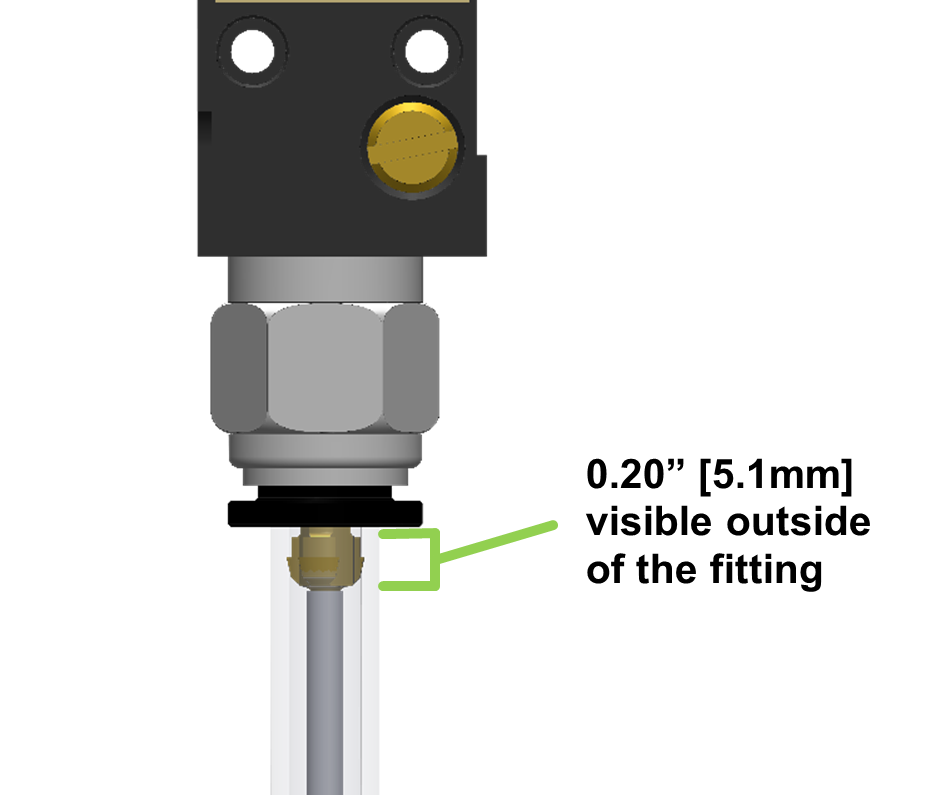
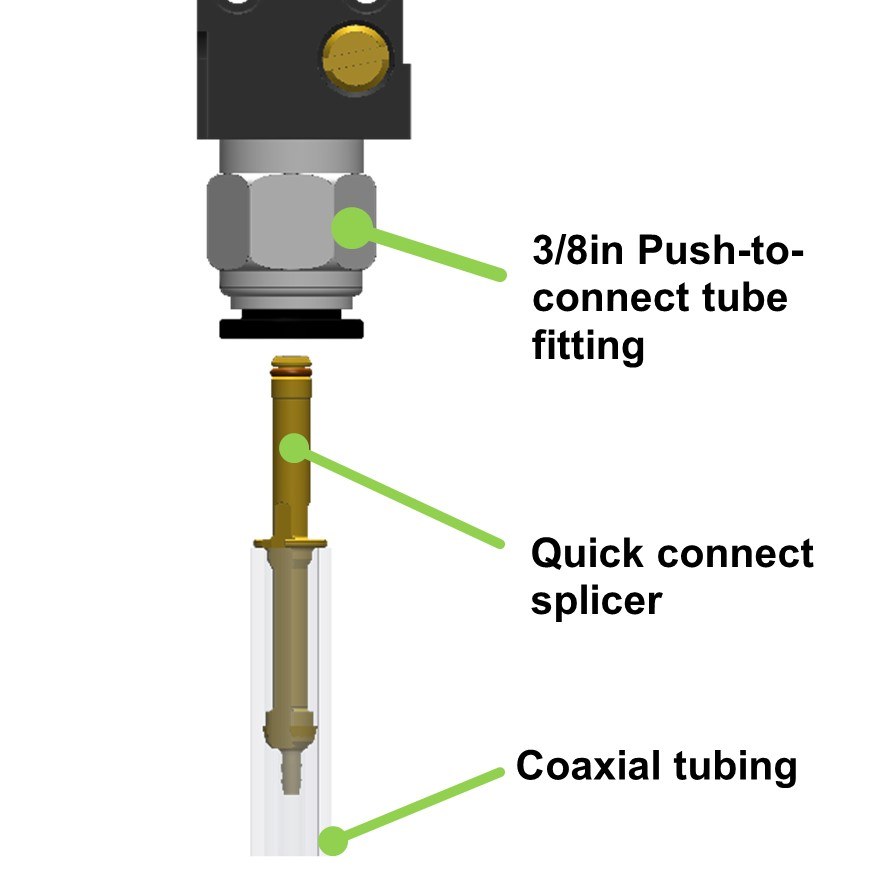
For systems using a quick-connect splicer, another common cause of fluid pooling in the outer coax tube is an improperly installed quick-connect fitting. When properly inserted, only approximately 0.20 in. [5.1 mm] of the quick connect should remain visible outside of the fitting.
If the fitting is not fully seated, fluid can bypass the intended flow path and enter the outer air tube. Verify that the quick connect is fully inserted and securely locked in place.
If the fitting is installed correctly but fluid appears to be leaking into the outer coax tube at this connection point, the O-ring on the quick connect may be damaged or worn. Inspect the O-ring for cuts, flattening, or other signs of wear. Replace the O-ring as needed. Contact Unist for a replacement O-ring if required.
To remove fluid from the outer hose, either increase the atomizing air flow temporarily and purge the fluid through the nozzle, or remove the nozzle assembly and drain the hose manually before restoring the proper air setting.