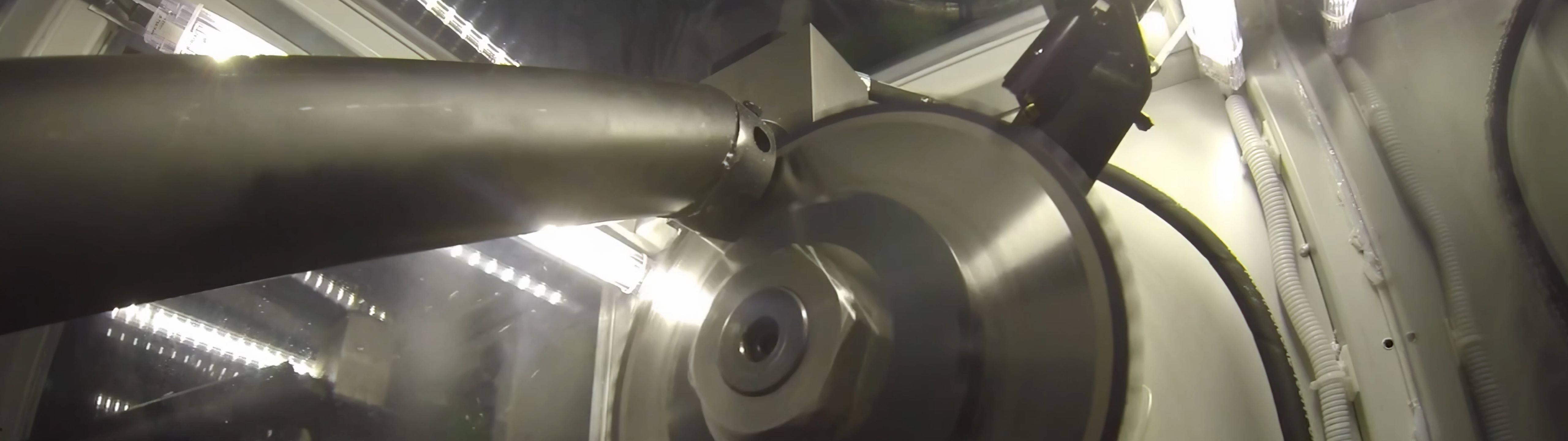
Circular Saw

Applications \ Circular Saw
Products

All Products
Applications

All Applications
Video

All Video
Support

All Support
Webpages

Request Consultation:  Circular Saw Lubrication Solution
loading
Consistent cuts, cleaner saws.
 

Cold saw & circular saw blade lubrication

You rely on your circular saw for speed, squareness, and cut quality. Inadequate lubrication can cause chip welding, burrs, drift, poor surface finish, and blade-related downtime. Unist systems deliver a controlled amount of lubricant to the tooth, gullet, and blade sides, stabilizing the cut, and protecting the blade. Unist Minimum Quantity Lubrication delivers the same or better performance as flood coolant but without fluid management or mess.

Upgrade your saw with Unist MQL:

Mess-free operation - Eliminate flood coolant mess, carry-off, sump upkeep tasks, and fluid disposal costs

Reduce costs - Lower fluid expenses and downtime = less cost-per-cut

Longer blade life - Extend blade life with targeted lubrication

Clean, dry chips - Improve chip handling and increase scrap value

Learn more about MQL

Get consultation
Better cut quality
Cut smoother, squarer, more consistent parts.
  • Cleaner cut finish
  • Improved squareness
  • Reduced burr formation
  • More repeatable results
Unist MQL systems
for circular saws.
  • Easily installed on any circular saw
  • Eliminate the flood coolant mess
  • Let operators see the cut more clearly
  • Use a controlled amount of lubricant
Heat, chips, and downtime
When lubrication misses the cut, problems stack up fast.
  • Chip welding: Heat and adhesion can load the teeth and gullets
  • Cut instability: Chatter, drift and rubbing can hurt accuracy and finish
  • Excessive heat: More friction can shorten blade life and increase downtime
Hidden costs of coolant
Switch to Unist MQL and eliminate these costs.
  • Coolant equipment and upkeep (skimmers, vacs, floor scrubbers, etc.)
  • Coolant consumables (biocide, defoamer, rags, filters, etc.)
  • Labor (sump cleanouts, machine wipedowns, floor cleaning, concentrate monitoring, etc.)
  • Health/Safety (Slip/fall risks, dermatitis, air quality, odors)
Unist saw nozzles
Targeted delivery. Not foggy overspray.

Deliver lubricant to blade sides, teeth, and gullets to support smoother cutting, more consistent blade life, and fewer lubrication-related interruptions.

Why saw with Unist?
Eliminate flood coolant mess, treatment and disposal
Extend blade life with targeted lubrication
Use as little as 2–4 ounces per shift
Keep operators happy with skin-friendly Coolube® lubricant
Increase the value of chips/swarf that are virtually dry
Use environmentally-friendly, renewable lubricants
Circular Saw

Unist MQL capabilities

Circular Saw Types:
  • Cold Saws
  • High-Speed Cut-Off Saws

  • Profile Saws (upcut/downcut)
  • Manual Chop Saws
  • Flying Cutoff Saws
  • Servo-Fed / CNC Cut-to-Length Saws
  • Cutoff + End Finishing Lines
  • Multi-Head / Multi-Station Cutoff Cells
Metals:
  • Aluminum

  • Stainless Steel

  • Carbon Steel

  • Alloy/Tool Steel

  • Cast Iron

  • Inconel

  • Titanium

  • Magnesium

  • Copper Alloys

Blades:
  • HSS

  • Carbide-Tipped Blades (TCT)

Profiles:
  • Bundles

  • Beams

  • Channels/Angles

  • Extrusion

  • Bars/Rods

  • Tube/Pipe

  • Plates/Blocks

  • Foundry Billets and Ingots

View products
Better Cuts, Zero Mess | Why a Century-old Saw Blade Manufacturer Recommends Unist
Why a century-old saw blade manufacturer recommends Unist
"It’s easy to promote Unist because it’s a good product. We recommend it to anybody who will listen."
Full Article
Unist Saw Blade Lube System
"We've get better blade life and productivity while eliminating the maintenance of flood coolant."
We've been able to get the same or better blade life and productivity out of the Saw Blade Lube Systems while eliminating the maintenance problems we had with flood coolant.
- Denver Nelms, Vice President, RHW Metals
Full Testimonial
PCP - Sawing
"Would recommend their product to anyone"
Their system are extremely reliable, they help reduce lubricant use and reduce the production cost overall.
- Steeve Boulianne, Process Technician, PCP Aluminum
Full Testimonial
Rick, Therma-Tron-X Inc. - Sawing
"With the Unist coolant, you can clean the saw with a vacuum cleaner"
The guys like it because before they'd have to wear leather aprons so they wouldn't get this flood coolant all over their clothes.
- Rick R, Facilities Leadman, Therma-Tron-X, Inc.
Full Testimonial

Cut cleaner, run longer - keep chips moving so the cut stays stable

Poor chip evacuation and packed gullets can lead to rougher edges, burrs, drifting cuts, and avoidable rework. Unist MQL applies lubricant at the blade’s point of contact to reduce friction and help chips release from the gullets. The result is a cleaner cut, more repeatable performance, and less downtime tied to blade instability.

Dry chips release from the gullets and help maintain a smoother cut.
Wet, sticky chips can load the gullets and hurt cut quality.
MQL produces chips dry enough to handle and store easily, like we do in the Unist shop.
 MQL (Minimum Quantity Lubrication)Traditional Flood Coolant
Blade LifeOften longer due to targeted lubrication and lower frictionCan shorten when heat, wash-off, and fluid-management issues disrupt the cut
Cut QualityMore consistent, cleaner, and squarer cutsCan hide poor cutting conditions and leave rougher, less consistent results
Fluid ConsumptionMinimal; typically ounces per shiftHigh; typically gallons per shift
MaintenanceSimple refills and routine checksTanks, sump cleaning, monitoring, and fluid management
Chip HandlingNear-dry chips that flow more freely and hold better scrap valueWet chips that can clump, stick, and lower scrap value
Post-process CleaningOften limited to a wipe-downMore cleanup on parts, saws, and surrounding area
WorkplaceCleaner, drier work area; no mistMessy, slippery floors; coolant mist
CostLower cost-per-cut; efficient fluid useHigher fluid, disposal, and cleanup burden
EnvironmentPlant-based lubricant options and less waste fluidMore disposal and treatment requirements
IntegrationRetrofit-friendly with limited production disruptionUsually already built in, but requires ongoing fluid management

Our OEM circular sawing partners

Metlsaw logo
Metlsaw
Haberle logo
Haberle
TigerStop logo
TigerStop
B&O Saws logo
B&O Saws
SOCO logo
SOCO
Vista Machines logo
Vista Machines
Joseph Machine logo
Joseph Machine
DeMichele Group logo
DeMichele Group

Components of a Unist circular saw solution

1
MQL System

Precision lubricant applicators make dialing-in proper saw lubrication quick and easy.

Unist MQL systems for sawing
2
Unist Lubricant

High performance lubricants combat friction and protect blades.

Unist high performance lubricants protect saw blades
3
Saw Nozzle

Saw-specific nozzle applies lubricant precisely. Available to fit in any circular saw setup.

Saw-specific nozzle applies lubricant precisely. Available to fit in any circular saw setup.

Circular saw nozzles

BAT nozzle
BAT nozzle

Easily fits on a wide variety of circular saws, vertical band saws, and horizontal band saws

Coaxial nozzles
Coaxial nozzles

Unist has a wide variety of MQL coaxial nozzle types to fit each specific circular saw application

Custom nozzles
Custom nozzles

For OEMs we offer custom nozzles to ensure the best solution for your application

Ready to transform your circular sawing performance?
Tell us your circular saw type, blade type, material, and any process concerns. We’ll recommend a circular sawing MQL setup that fits your process. Request a consultation for your saw

Frequently asked questions

Showing 3 of 22 Show all
Q:
Can MQL improve cut quality, squareness, and repeatability on circular saws?
A:
Yes. On industrial circular saws and cold saws, MQL helps improve cut quality by applying lubricant directly to the tooth, gullet, and blade sides. That targeted lubrication reduces friction, heat, and chip adhesion at the cut, which can support smoother cut faces, better squareness, reduced burr formation, and more repeatable results. It also gives operators a clearer view of the cut than flood coolant, making it easier to spot instability before it turns into scrap, rework, or blade-related downtime.
Q:
Without flood coolant, will the blade overheat or wear faster?
A:
No. Instead of flooding the whole blade, MQL lubricates the blade-tooth interface directly, where friction and heat begin. That targeted approach can control heat more efficiently than coolant washing over the entire blade and often supports same or better blade life, more stable cutting, and more consistent cut quality.
Q:
MQL looks almost dry. Does it really lubricate the cut?
A:
Yes. MQL is supposed to look controlled, not flooded. The system applies a small amount of lubricant to each tooth, gullet, and blade side before the blade enters the cut. That reduces friction and helps control heat at the source. The proof is not how wet the machine looks. The proof is smoother cuts, better squareness, freer chip release, stable blade performance, and less coolant-related mess and maintenance.
Q:
How does MQL compare with flood coolant on large structural profiles?
A:
The biggest difference is where the process is controlled. Flood coolant tries to manage heat after it is created, while MQL applies a precise amount of lubricant to each blade tooth before it enters the work. On large structural profiles, that can reduce friction at the source, help limit chip welding and rubbing, and support more stable cutting across a wider range of stock sizes without the cleanup and fluid-management burden of flood systems.
Q:
Do blades actually last longer with MQL?
A:
Blade life still depends on material, speed, feed rate, blade condition, and setup, but MQL helps by reducing friction and heat at the cutting point. When the cut stays more stable and chip adhesion is reduced, circular saw blades often run longer between changeouts and hold cut quality more consistently.
Q:
Will MQL help chips release and prevent gullet loading?
A:
Yes. Flood coolant may appear to wash chips away, but wet chips are more likely to stick, clump, and interfere with the cut. With MQL, chips stay much drier and release more freely from the blade, which helps reduce gullet loading and supports more stable cutting, better cut quality, and fewer blade-related interruptions.
Q:
Will parts and chips come out oily with MQL?
A:
No. MQL uses such a small amount of lubricant, parts and chips typically come off the saw nearly dry. That reduces post-process cleanup, makes chips easier to handle, and can improve scrap value compared with wet, flood-soaked chips.
Q:
Why switch from flood coolant to MQL on a circular saw?
A:
Flood coolant can work, but it adds treatment, disposal, cleanup, sump maintenance, carry-off, and fluid-management costs beyond the purchase price. MQL is worth considering when you want to reduce overall fluid burden, improve cut visibility, keep chips near-dry, and support lower cost per cut. Many shops also find that moving away from flood simplifies day-to-day saw maintenance and housekeeping.
Q:
Does MQL lower cost per cut enough to justify the switch?
A:
In many circular sawing applications, yes. The value is not just in fluid savings. MQL can reduce coolant purchases, sump maintenance, cleanup labor, disposal costs, and downtime tied to poor chip handling or blade instability. When you factor in blade life, cut quality, and lower process burden, many shops see a strong cost-per-cut case for switching.
Q:
Is MQL a proven technology for circular sawing?
A:
Yes. MQL is a mature, industry-proven metal cutting method, not an experimental idea. Unist has decades of experience with minimum quantity lubrication, and MQL is already used by major saw OEMs and fabrication shops for industrial sawing applications where cut quality, blade life, and process cleanliness matter.
Q:
What metals can be cut with MQL on a circular saw?
A:
MQL is used on a wide range of ferrous and non-ferrous metals, including carbon steel, tool steel, stainless steel, aluminum alloys, cast iron, superalloys, titanium, magnesium, copper alloys, and zinc die cast. The key is matching lubricant, nozzle placement, blade type, and delivery rate to the material and cut.
Q:
Is MQL only good for cutting aluminum?
A:
No, MQL is not limited to aluminum. It is also effective on ferrous materials and tougher alloys such as tool steel, stainless steel, and Inconel when the system is matched to the blade, material, and cut conditions. Aluminum is a strong fit for MQL, but it is far from the only one.
Q:
Can MQL handle heavy-duty circular sawing and tougher materials?
A:
Yes. MQL is already used in demanding circular sawing applications, including large structural profiles and difficult alloys. The key is matching the lubricant, nozzle placement, blade type, and delivery rate to the material and cut. When applied correctly, MQL can support stable cutting, strong blade life, and consistent results even in tougher jobs.
Q:
How disruptive is it to retrofit a circular saw for MQL?
A:
MQL systems are designed for straightforward integration on circular saws and cold saws and can typically be installed with limited downtime. Most retrofits involve mounting the applicator and nozzle, connecting air and power, and dialing in the delivery.
Q:
Is it hard to retrofit my saw for MQL?
A:
Unist MQL systems are compact, modular, and built for retrofit. In most cases, installation comes down to mounting the applicator and nozzle, then connecting air and power. Major machine modifications are typically not required.
Q:
What does a circular saw need to run MQL?
A:
Most Unist MQL systems require 80 to 100 PSI of clean, dry air at roughly 1 to 2 SCFM. They are available with different actuation options, including air and voltage inputs, so they can be integrated with existing machine controls.
Q:
Does MQL require operator training?
A:
Once the system is dialed in, operators usually just need to keep a small reservoir filled and monitor normal cut-quality signals. Compared with flood coolant, there is no sump to manage, no mixing ratios to track, and no tramp oil to deal with.
Q:
Where does the lubricant go when sawing with MQL?
A:
When MQL is applied correctly, most of the lubricant is consumed in the cut itself. Instead of washing over the whole saw, it is delivered where it can do the most work at the tooth, gullet, and blade sides. That is why parts and chips can come off nearly dry and usually need little or no post-process cleanup.
Q:
Will MQL create mist or overspray in my facility?
A:
Not when the system is set up correctly. MQL uses targeted, near-dry delivery with a very small amount of lubricant, so the goal is lubrication at the blade, not airborne mist or overspray around the machine. When properly applied, the work area is typically cleaner and drier than with flood coolant.
Q:
Will Coolube cause issues on my saw or downstream process?
A:
NO. Coolube is designed to be compatible with industrial equipment when properly applied. It is highly refined, plant-based, non-corrosive, non-conductive, paint-friendly, and low-creep, so it is less likely to wick into places where it does not belong. Any light residual film is typically easy to clean with mild detergent or degreaser. This is one reason some shops prefer MQL over flood coolant, which can creep into enclosures, displace grease, encourage corrosion, and combine with chips to form abrasive sludge.
Q:
Will Unist lubricant gum up lines or nozzles?
A:
Unist lubricants are highly refined, resist oxidation, and are not prone to becoming sticky, which is important for reliable MQL delivery. Combined with precision pumps and clean delivery lines, that helps minimize clogging and nozzle issues. Preventive maintenance is typically much lighter than the tanks, filters, and fluid replacement required with flood coolant systems.
Q:
Is Coolube more expensive than flood coolant?
A:
Per gallon, Coolube looks more expensive than flood coolant. Per shift, the picture changes quickly. Many Unist users report using only about 2 to 4 ounces in a typical shift. The more important comparison is total process burden, including coolant equipment, maintenance, disposal, cleanup labor, and the impact on blade life and cost per cut.